Georgia Dog Registration Information
State Licensed, Service Dogs and Emotional Support Dogs in Georgia
If you’re searching where do I register my dog in Georgia for my service dog or emotional support dog, the most important thing to know is this: in Georgia, “registration” usually means a local pet license and/or a rabies tag issued through your county or city animal services (or a related local public health or animal control program).
There is no single statewide service dog registry you must use to make a dog a service animal, and there is no official emotional support animal registration required by Georgia law. In most cases, you’ll handle a dog license in Georgia locally (and keep your dog’s rabies vaccination current), and separately follow the rules that apply to service dogs or emotional support animals depending on where you need the animal accommodated.
Where to Register or License Your Dog in Georgia
Because “where to register a dog in Georgia” depends on where you live, below are several example official offices that handle pet registration, licensing, animal control, or rabies-related compliance. If your county isn’t listed, look for your local “Animal Services,” “Animal Control,” or “Animal Welfare & Enforcement” department.
Fulton County Animal Services (Pet Registration / License)
- Address: 1251 Fulton Industrial Blvd NW
- City/State/ZIP: Atlanta, GA 30336
- Phone: 404-613-0358
- Email: customerservice@fultoncountyga.gov
- Office hours: Monday–Friday 11:00 AM–7:00 PM; Saturday–Sunday 11:00 AM–6:00 PM
DeKalb County Animal Services & Enforcement
- Address: 1300 Commerce Drive
- City/State/ZIP: Decatur, GA 30030
- Phone: 404-294-2996 ext. 2
- Email: 311CCC@dekalbcountyga.gov
- Office hours: Front Office Monday–Friday 8:30 AM–5:00 PM (after-hours calls routed via emergency/non-emergency systems)
Cobb County Animal Services
- Address: 1060 Al Bishop Drive
- City/State/ZIP: Marietta, GA 30008
- Phone: 770-499-4136
- Email: stephen.hammond@cobbcounty.gov (Director, Animal Services)
- Office hours: Tuesday–Sunday 10:30 AM–4:30 PM (closed Mondays and holidays)
Gwinnett County Animal Welfare & Enforcement (Bill Atkinson Animal Welfare Center)
- Address: 884 Winder Highway
- City/State/ZIP: Lawrenceville, GA 30045
- Phone: 770-339-3200
- Email: AnimalWelfare@GwinnettCounty.com
- Office hours: Monday–Thursday 8:30 AM–5:00 PM; Friday–Saturday 8:30 AM–4:00 PM; Sunday closed
Chatham County Animal Services (Pet Registration / Rabies Tags)
- Address: 7211 Sallie Mood Dr
- City/State/ZIP: Savannah, GA 31406
- Phone: 912-652-6575
- Email: Not listed on the referenced office pages
- Office hours: Open to the public 1:00 PM–4:30 PM daily except Wednesdays
Overview of Dog Licensing in Georgia
What “registering your dog” usually means
In day-to-day use, people often say “register my dog,” “get papers,” or “make my dog official.” In Georgia, that typically refers to one (or both) of the following local compliance steps:
- Rabies vaccination compliance (your veterinarian provides a rabies certificate, and many counties issue or require a rabies tag).
- A county or city pet license (sometimes called “pet registration” or “animal control dog license Georgia” requirements), usually renewed annually or on a schedule tied to rabies vaccination.
The practical result is that your dog is in your local jurisdiction’s system and can more easily be returned to you if lost, while also supporting rabies control and enforcement of local animal ordinances.
Who runs dog licensing in Georgia?
Georgia does not operate dog licensing as a single centralized statewide registry for all pet owners. Instead, the primary agencies you’ll deal with are typically:
- County Animal Services / Animal Control / Animal Welfare & Enforcement (common in metro areas and many counties).
- City animal control in some municipalities (especially where city ordinances differ from county rules).
- Local health departments may be involved in rabies control guidance, exposure response, or related public health coordination (varies by jurisdiction).
- Georgia Department of Public Health (DPH) provides statewide rabies information and guidance, and directs people to local health departments and animal rabies control officers for additional help.
Rabies vaccination requirements (why counties focus on it)
Rabies is a fatal viral disease that affects mammals, and Georgia public health guidance emphasizes keeping owned dogs and cats regularly vaccinated for rabies by a veterinarian. If there’s a bite or potential exposure incident, local authorities may use quarantine and observation procedures for domestic animals under certain circumstances, and local officials (animal control and/or health departments) are often part of that response.
That’s why many counties tie the dog license in Georgia process directly to proof of rabies vaccination and why you may hear “rabies tag” and “license” used almost interchangeably in some locations.
How Dog Licensing Works Locally in Georgia
Step-by-step: how to get a local license or rabies tag
- Confirm the correct jurisdiction. Start with where you live (county and city). Your county animal services website or county government directory typically explains whether licensing is required and where it is processed.
- Get your dog vaccinated for rabies by a veterinarian. Ask for the rabies vaccination certificate and keep a copy with your records.
- Apply for the license/tag per local instructions. Many counties allow in-person processing; some accept mail-in requests. Requirements commonly include the rabies certificate and a fee.
- Renew on schedule. Renewal timing and fee structure can vary. Some jurisdictions offer one-year vs. three-year options depending on the rabies vaccination duration and local policy.
- Attach tags and maintain ID. Many ordinances require that the rabies tag (and/or license tag) be worn on the dog’s collar.
Why the process differs by county
Georgia counties and cities can adopt ordinances that set their own practical licensing rules: fees, deadlines, documentation, and where licenses are issued. For example, some counties explicitly describe “pet registration” as a county ordinance requirement and may cite penalties for noncompliance. Others emphasize rabies tags and allow licensing tied to proof of rabies inoculation.
This is why the most accurate answer to where to register a dog in Georgia is almost always: your local county/city animal services office.
What about service dogs or emotional support animals?
Even if your dog is a service dog or emotional support animal, local licensing rules can still apply. In other words, service dog status is not the same thing as a county dog license, and an ESA letter is not a substitute for a rabies certificate or local licensing steps. The sections below explain the legal differences so you can avoid scams, confusion, and unnecessary “registration” purchases.
Service Dog Laws in Georgia
Service dog status vs. a dog license in Georgia
A dog license (or rabies tag) is a local animal ordinance compliance step. A service dog is a disability accommodation concept under federal law (and sometimes supported by state laws) related to access and nondiscrimination.
That means you can have a perfectly legal, fully recognized service dog and still need to comply with your county’s licensing and rabies requirements. Likewise, licensing your dog does not “make” the dog a service animal.
Do you have to register a service dog in Georgia?
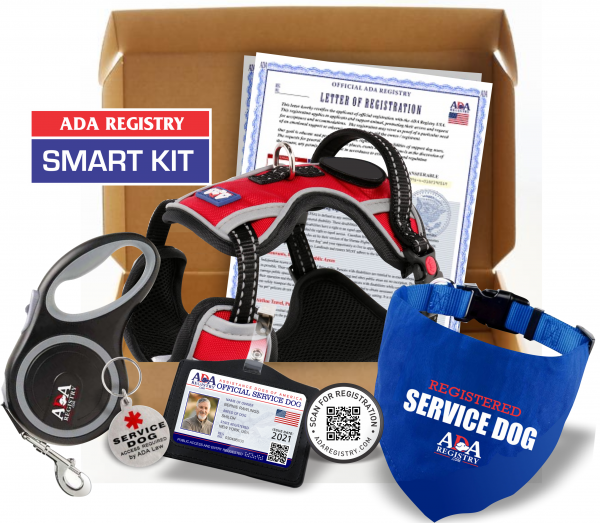
Generally, no special “service dog registration” is required to make a dog a service animal. Be cautious with anyone claiming you must buy a certificate, ID card, or registry listing to have a valid service dog—those products can create confusion, and they are not the same thing as legal service-dog status.
What typically matters for public access
In practice, what matters for public access is that the dog qualifies as a service animal under applicable law and is appropriately controlled in public. A vest or ID may be optional in many circumstances, but it is not the same thing as legal qualification. If you’re trying to comply correctly, focus on (1) the dog’s eligibility and training/behavior standards for service work, and (2) your local licensing and rabies requirements.
Emotional Support Animal Rules in Georgia
Emotional support animals are different from service dogs
An emotional support animal (ESA) is not the same as a service dog. ESAs generally do not have the same public-access rights as service dogs in places like restaurants or stores. Instead, ESAs most commonly come up in housing contexts as an accommodation request related to a person’s disability.
There is no official ESA registration requirement
If you’re looking for “ESA registration” to make your dog legitimate, be careful. Typically, there is no official government-run ESA registry that you must purchase or join. What usually matters is whether you can support an accommodation request with appropriate documentation from a qualified health professional (when documentation is appropriate).
Licensing still applies
Even when your dog is an ESA, your county may still require a dog license in Georgia (local pet registration) and proof of rabies vaccination. So if the goal is “make my dog official,” you typically want to handle local licensing first and then separately handle any housing accommodation process as needed.
Frequently Asked Questions
Quick takeaway
If you’re asking where to register a dog in Georgia, the most reliable answer is: your county or city animal services/animal control office. That’s where most licensing and rabies-tag enforcement lives.
Then, treat service dog and emotional support animal topics as separate legal categories: they are not created by buying an online registration, and they do not replace your local pet licensing responsibilities.
Register A Dog In Other Georgia Counties
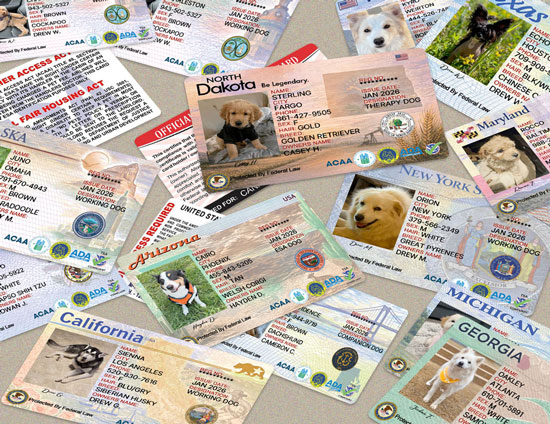
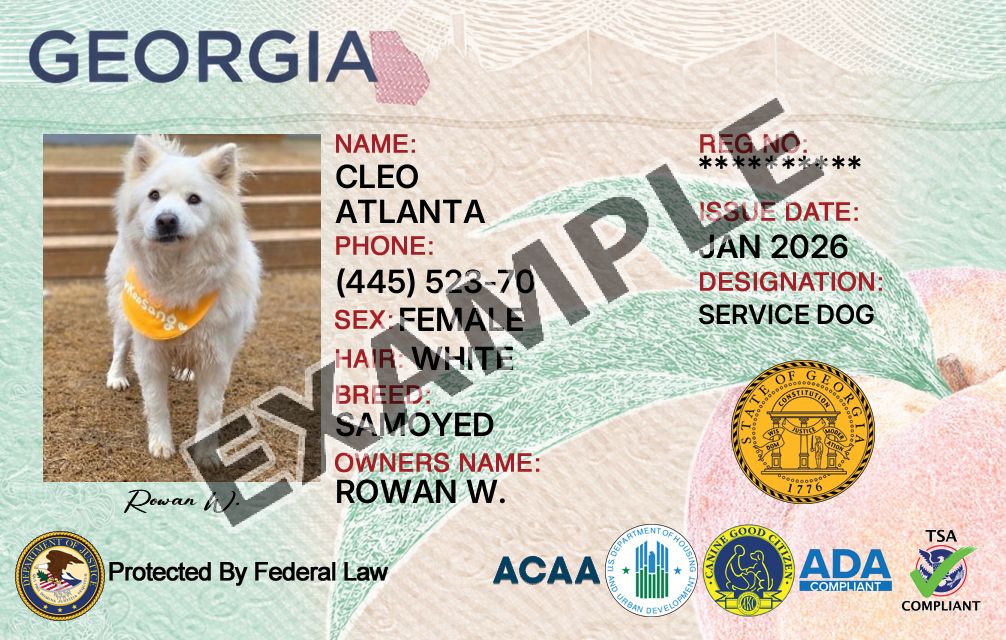
Select your county from the dropdown below to get started with your dog’s ID card. Requirements and license designs may vary by county, so choose your location to see the correct options and complete your pup’s registration.
- Appling County Dog Registration
- Atkinson County Dog Registration
- Bacon County Dog Registration
- Baker County Dog Registration
- Baldwin County Dog Registration
- Banks County Dog Registration
- Barrow County Dog Registration
- Bartow County Dog Registration
- Ben Hill County Dog Registration
- Berrien County Dog Registration
- Bibb County Dog Registration
- Bleckley County Dog Registration
- Brantley County Dog Registration
- Brooks County Dog Registration
- Bryan County Dog Registration
- Bulloch County Dog Registration
- Burke County Dog Registration
- Butts County Dog Registration
- Calhoun County Dog Registration
- Camden County Dog Registration
- Candler County Dog Registration
- Carroll County Dog Registration
- Catoosa County Dog Registration
- Charlton County Dog Registration
- Chatham County Dog Registration
- Chattahoochee County Dog Registration
- Chattooga County Dog Registration
- Cherokee County Dog Registration
- City of Athens County Dog Registration
- City of Augusta County Dog Registration
- City of Columbus County Dog Registration
- City of Cusseta County Dog Registration
- City of Georgetown County Dog Registration
- City of Macon County Dog Registration
- City of Preston County Dog Registration
- City of Statenville County Dog Registration
- Clarke County Dog Registration
- Clay County Dog Registration
- Clayton County Dog Registration
- Clinch County Dog Registration
- Cobb County Dog Registration
- Coffee County Dog Registration
- Colquitt County Dog Registration
- Columbia County Dog Registration
- Cook County Dog Registration
- Coweta County Dog Registration
- Crawford County Dog Registration
- Crisp County Dog Registration
- Dade County Dog Registration
- Dawson County Dog Registration
- Decatur County Dog Registration
- DeKalb County Dog Registration
- Dodge County Dog Registration
- Dooly County Dog Registration
- Dougherty County Dog Registration
- Douglas County Dog Registration
- Early County Dog Registration
- Echols County Dog Registration
- Effingham County Dog Registration
- Elbert County Dog Registration
- Emanuel County Dog Registration
- Evans County Dog Registration
- Fannin County Dog Registration
- Fayette County Dog Registration
- Floyd County Dog Registration
- Forsyth County Dog Registration
- Franklin County Dog Registration
- Fulton County Dog Registration
- Gilmer County Dog Registration
- Glascock County Dog Registration
- Glynn County Dog Registration
- Gordon County Dog Registration
- Grady County Dog Registration
- Greene County Dog Registration
- Gwinnett County Dog Registration
- Habersham County Dog Registration
- Hall County Dog Registration
- Hancock County Dog Registration
- Haralson County Dog Registration
- Harris County Dog Registration
- Hart County Dog Registration
- Heard County Dog Registration
- Henry County Dog Registration
- Houston County Dog Registration
- Irwin County Dog Registration
- Jackson County Dog Registration
- Jasper County Dog Registration
- Jeff Davis County Dog Registration
- Jefferson County Dog Registration
- Jenkins County Dog Registration
- Johnson County Dog Registration
- Jones County Dog Registration
- Lamar County Dog Registration
- Lanier County Dog Registration
- Laurens County Dog Registration
- Lee County Dog Registration
- Liberty County Dog Registration
- Lincoln County Dog Registration
- Long County Dog Registration
- Lowndes County Dog Registration
- Lumpkin County Dog Registration
- Macon County Dog Registration
- Madison County Dog Registration
- Marion County Dog Registration
- McDuffie County Dog Registration
- McIntosh County Dog Registration
- Meriwether County Dog Registration
- Miller County Dog Registration
- Mitchell County Dog Registration
- Monroe County Dog Registration
- Montgomery County Dog Registration
- Morgan County Dog Registration
- Murray County Dog Registration
- Muscogee County Dog Registration
- Newton County Dog Registration
- Oconew County Dog Registration
- Oglethorpe County Dog Registration
- Paulding County Dog Registration
- Peach County Dog Registration
- Pickens County Dog Registration
- Pierce County Dog Registration
- Pike County Dog Registration
- Polk County Dog Registration
- Pulaski County Dog Registration
- Putnan County Dog Registration
- Quitman County Dog Registration
- Rabun County Dog Registration
- Randolph County Dog Registration
- Richmond County Dog Registration
- Rockdale County Dog Registration
- Schley County Dog Registration
- Screven County Dog Registration
- Seminole County Dog Registration
- Spalding County Dog Registration
- Stephens County Dog Registration
- Stewart County Dog Registration
- Sumter County Dog Registration
- Talbot County Dog Registration
- Taliaferro County Dog Registration
- Tattnall County Dog Registration
- Taylor County Dog Registration
- Telfair County Dog Registration
- Terrell County Dog Registration
- Thomas County Dog Registration
- Tift County Dog Registration
- Toombs County Dog Registration
- Towns County Dog Registration
- Treutlen County Dog Registration
- Troup County Dog Registration
- Turner County Dog Registration
- Twiggs County Dog Registration
- Union County Dog Registration
- Upson County Dog Registration
- Walker County Dog Registration
- Walton County Dog Registration
- Ware County Dog Registration
- Warren County Dog Registration
- Washington County Dog Registration
- Wayne County Dog Registration
- Webster County Dog Registration
- Wheeler County Dog Registration
- White County Dog Registration
- Whitfield County Dog Registration
- Wilcox County Dog Registration
- Wilkes County Dog Registration
- Wilkinson County Dog Registration
- Worth County Dog Registration